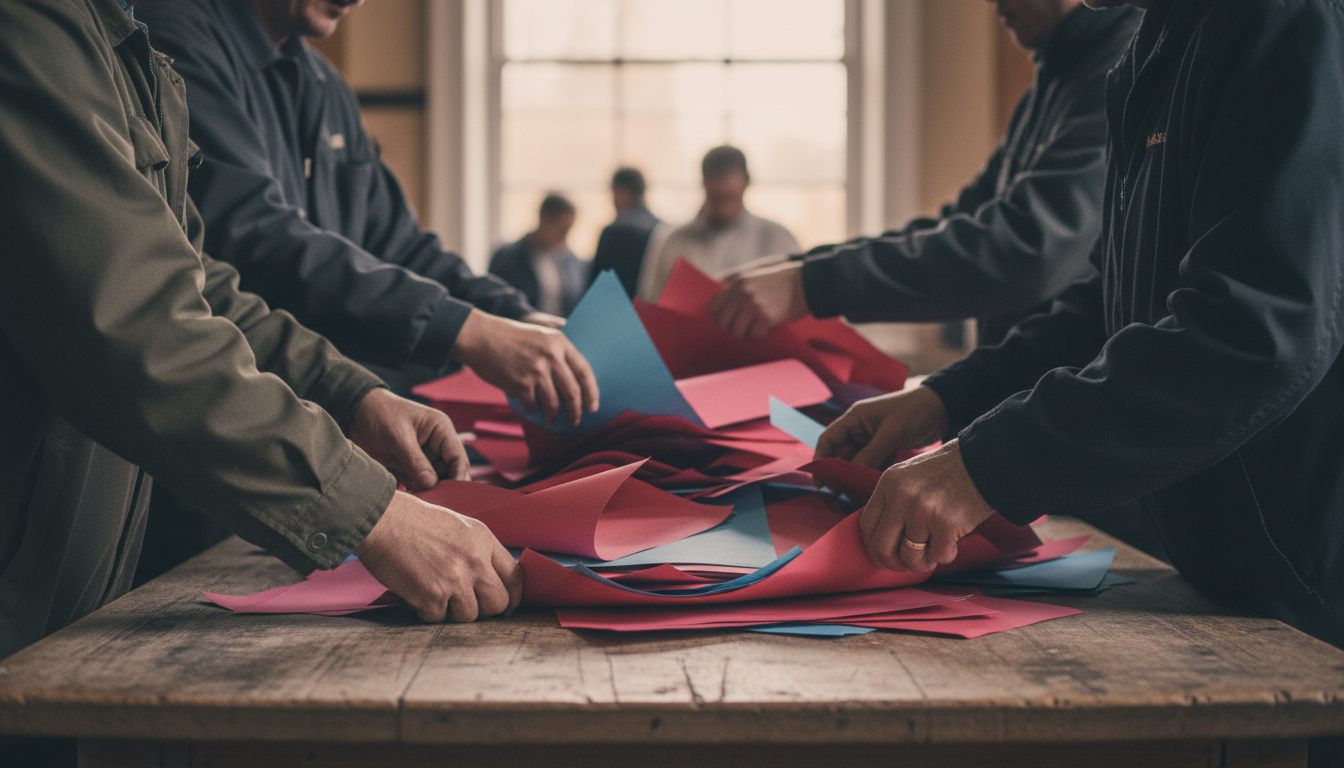
"The middle" gets caricatured as timidity — average the two parties' positions and call it wisdom. That is not what we mean, and it is not what most moderate voters actually believe.
Real people in the middle hold strong views that don't bundle neatly. A welder who wants aggressive trade enforcement and a public option. A suburban parent who wants well-funded police and police accountability. A small-business owner who wants low taxes and a carbon price. Polls find these mixed profiles constantly; party platforms almost never do.
So when we say we promote "the middle," we mean three specific things:
- Representation for mixed-view majorities. Positions that command broad support across party lines deserve champions, even when neither party's activist wing wants them.
- Rewarding cross-partisan behavior. Legislators who negotiate, co-sponsor across the aisle, and vote their district rather than their donor list should get attention and — critically — funding for it.
- Fixing the machinery. Closed primaries, gerrymandered safe seats, and outrage-driven fundraising manufacture extremism. Structural reforms that let moderates win are a standing beat here, not a one-off story.
What we are not: both-sides referees, party-switch cheerleaders, or a home for the politically exhausted to give up quietly. The middle is the majority. It should act like one.